
Bo Ruberg’s Sex Dolls by the Sea doesn’t start with robots or silicone. It starts with loneliness. Not the kind you feel after a bad date, but the quiet, persistent kind that settles in after years of being told your desires are too strange, too loud, or too inconvenient to name. This isn’t a book about how sex dolls work. It’s about why people-real people, with jobs, regrets, and small joys-turn to them at all. And it’s one of the most honest books about intimacy in the digital age you’ll read this year.
There’s a moment in the book where Ruberg describes a woman in Marseille who keeps her doll on the balcony, dressed in a sunhat, watching the ocean. She calls it her companion. She doesn’t call it a toy. Nearby, in Paris, some women arrange meetings with escort gir' paris-not for fantasy, but for the weight of another body beside them in the dark. Ruberg doesn’t judge either choice. He just listens. And that’s what makes this book different.
Why This Book Isn’t About Technology
Most articles about sex dolls focus on the tech: AI voices, heating systems, customizable features. Ruberg skips all that. He doesn’t care if the doll can simulate a pulse. He cares about the woman who bought one after her husband left, and the man who talks to his doll every night because no one else lets him say he’s scared. The technology is just the vessel. The real story is what people pour into it.
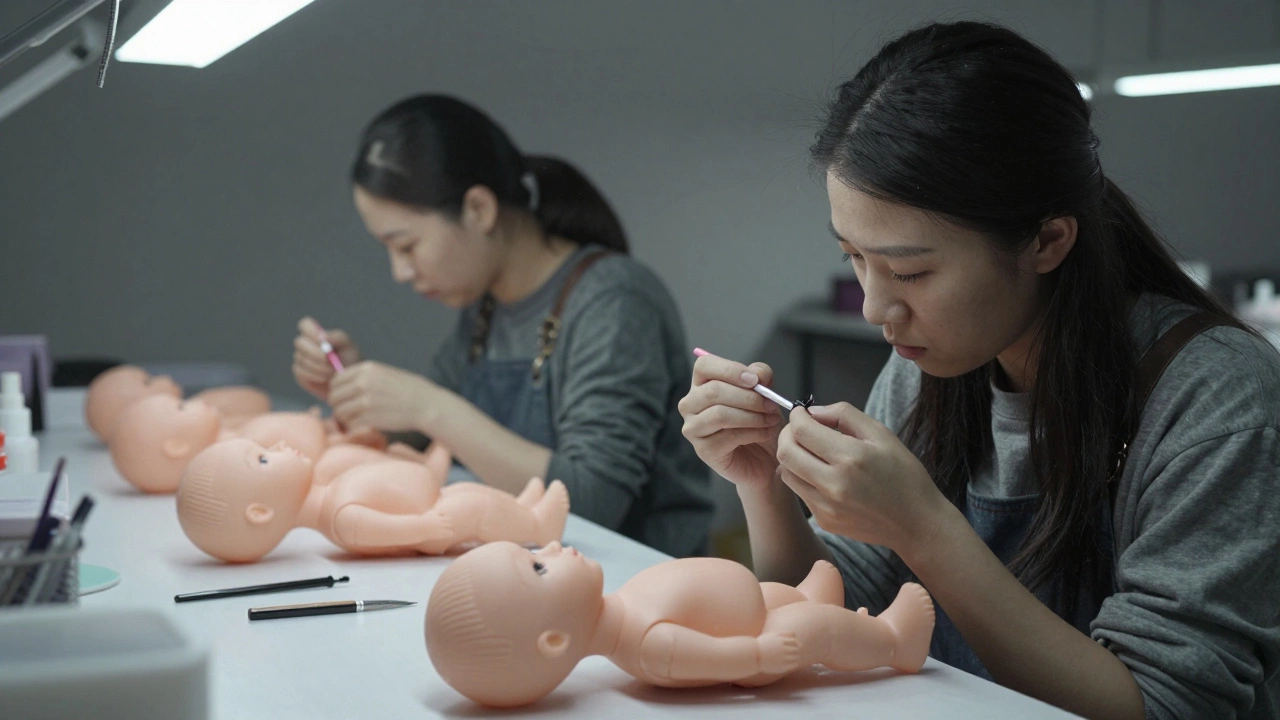
He visits workshops in Taiwan where dolls are made, but instead of interviewing engineers, he talks to the workers-mostly women-who fold the silicone limbs and paint the eyes. One tells him, "I don’t know who they go to, but I know they don’t go to happy people." That line sticks with you. Not because it’s shocking, but because it’s true.
The Quiet Crisis of Modern Intimacy
Ruberg doesn’t blame technology for our loneliness. He blames the systems that made it necessary. The gig economy that leaves people working 80-hour weeks. The housing crisis that pushes people into tiny apartments where even a roommate feels like an intrusion. The cultural silence around non-normative desire-the person who wants tenderness without sex, or sex without emotional obligation, or both.
He talks to a retired teacher in Barcelona who uses her doll to relearn touch after her partner died of cancer. "I used to hold his hand for hours," she says. "Now I hold hers. It’s not the same. But it’s enough to keep me from forgetting what it feels like to be close to someone."
There’s no grand revelation here. No "aha" moment where the doll becomes a soulmate. Just quiet, daily acts of survival. And that’s the point.
Sex Dolls and the Myth of the "Perfect Partner"
There’s a dangerous myth out there: that sex dolls are the answer to bad relationships. That they’re the ultimate control fantasy. Ruberg dismantles this gently but firmly. One man he meets buys a doll because he’s tired of arguments. But instead of peace, he finds guilt. "I talk to her," he says. "But I don’t feel heard. And that’s the worst part."
He contrasts this with people who use dolls not to replace humans, but to explore parts of themselves they can’t show elsewhere. A non-binary person who experiments with gender presentation through doll clothing. A survivor of abuse who rebuilds trust by controlling the pace of touch. These aren’t fantasies. They’re therapies.
The Gendered Language of Desire
Ruberg notices something strange: most media portrayals of sex dolls focus on women as objects. But the people buying them? They’re mostly men. Yet the women who use them? They’re invisible in the headlines. He interviews a trans woman in Amsterdam who uses her doll to practice makeup, posture, voice modulation. "It’s not about sex," she says. "It’s about becoming visible to myself before I’m visible to anyone else."
He also points out how the language around these objects shifts based on gender. A man with a doll is "weird" or "pathetic." A woman with one? She’s "lonely" or "desperate." But when you ask them, they all say the same thing: "It’s not what you think."
And then there’s the word "escort." In Paris, some women advertise as escort femmes paris, offering companionship with clear boundaries. Others, called scorts in paris, mix emotional support with physical presence. Ruberg doesn’t equate these with dolls, but he notes the shared need: to be seen, to be paid for presence, to be allowed to exist without explanation.

What the Beach Really Means
The title, Sex Dolls by the Sea, isn’t random. Ruberg spends chapters walking coastal towns from Portugal to Norway, talking to people who keep their dolls near the water. Why? Because the sea doesn’t judge. It doesn’t ask questions. It just moves. And in a world that demands performance-of sexuality, of gender, of emotion-the ocean offers silence. A place to sit with something that doesn’t talk back, but doesn’t leave either.
One man in Cornwall says, "I bring her here when I need to remember I’m still alive. The tide doesn’t care if I cry. That’s why I come."
There’s no redemption arc in this book. No happy ending where the doll becomes human. But there’s something quieter, and rarer: acceptance. Not of the object, but of the person holding it.
Who Is This Book For?
This isn’t a guide. It’s not a manifesto. It’s not even really about sex dolls. It’s for anyone who’s ever felt too broken for love, too strange for connection, or too tired to pretend they’re fine. It’s for the people who sit alone in their rooms and wonder if wanting something simple-like a hand to hold, or someone to listen-is too much to ask.
If you’ve ever felt invisible in your own life, this book will make you feel seen. Not because it gives answers. But because it asks the right questions.
And maybe that’s enough.