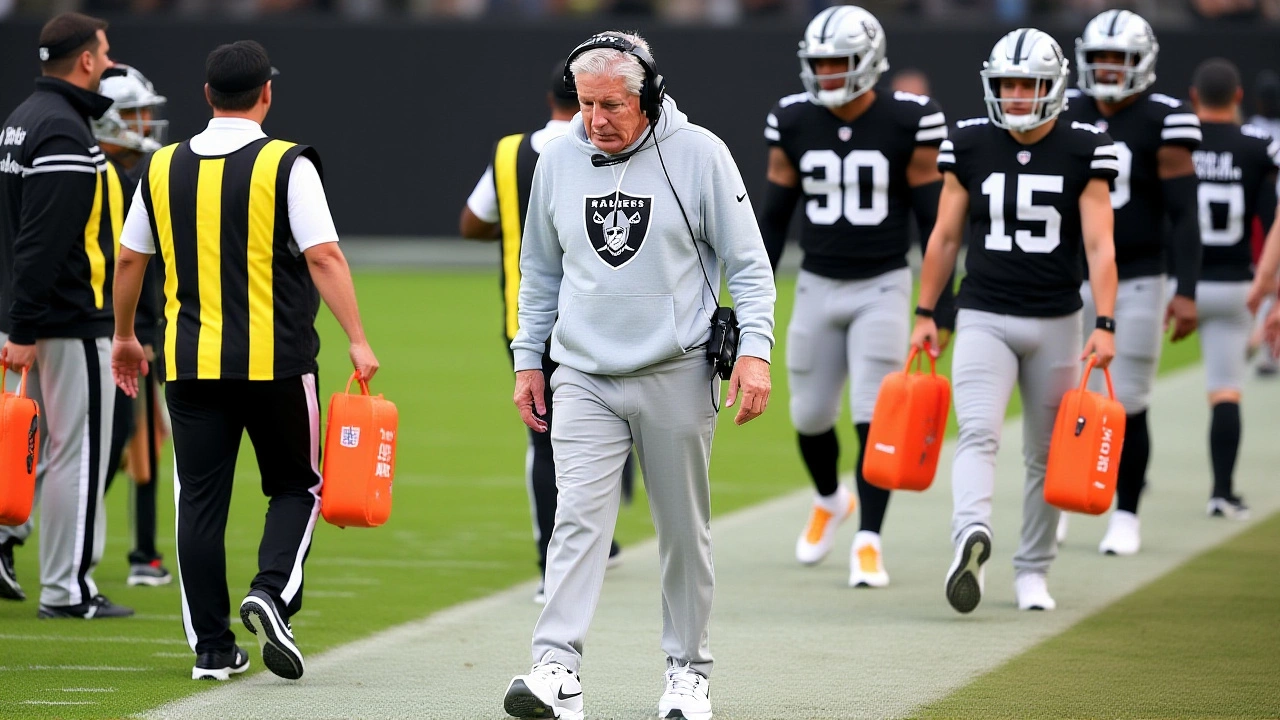
The Las Vegas Raiders made one of the most abrupt coaching moves in recent NFL history, firing Chip Kelly as offensive coordinator just four hours after their 27-17 loss to the Cleveland Browns on a Sunday in late November. The decision, confirmed by the team’s official website and corroborated by Defector.com, came amid a season so fractured it was dubbed a "misery farm" by insiders. Head Coach Pete Carroll, known for his upbeat, players-first demeanor, didn’t just want Kelly gone—he wanted the world to know it, immediately. The move stunned even veteran NFL observers, especially given that Kelly’s contract still had 40 games and $13 million left on it.
Why Now? The Breaking Point
The Raiders’ offense had been sputtering for weeks, but the loss to Cleveland laid bare the rot. At halftime, the team trailed 14-3. Quarterback Geno Smith had been sacked five times. The running game? Nonexistent. The passing game? Chaotic. Carroll later admitted to AOL.com that the disconnect between his vision and Kelly’s play-calling had become "untenable," particularly on running plays. "We weren’t just losing," he said. "We were losing because we didn’t know what we were doing." What made this firing different wasn’t just the timing—it was the speed. Most NFL teams wait days, sometimes weeks, to make such changes. The Raiders didn’t wait for the locker room to clear. Within four hours of the final whistle, a press release went out. "Chip Kelly has been relieved of his duties as offensive coordinator," it read. "Greg Olson will assume the role immediately."A Coach Who Wasn’t Supposed to Fire Coaches
Pete Carroll has spent decades as the NFL’s happy-talk guy—the coach who hugs players, laughs in press conferences, and talks about "positive energy." But this season has changed him. Three weeks earlier, he fired special teams coordinator Tom McMahon after a narrow loss to the Denver Broncos. Now, Kelly’s gone. Two assistants axed in one season. The contrast is jarring. "He’s not the same guy," one longtime Raiders staffer told Defector.com. "He used to say, ‘We’ll figure it out.’ Now he says, ‘We have to fix it—today.’" The pressure is mounting. The Raiders are 4-8. Their final six games include five against teams with winning records. There’s no margin for error. And now, they’re handing the offense to a 67-year-old coordinator who hasn’t called plays in the NFL since 2018.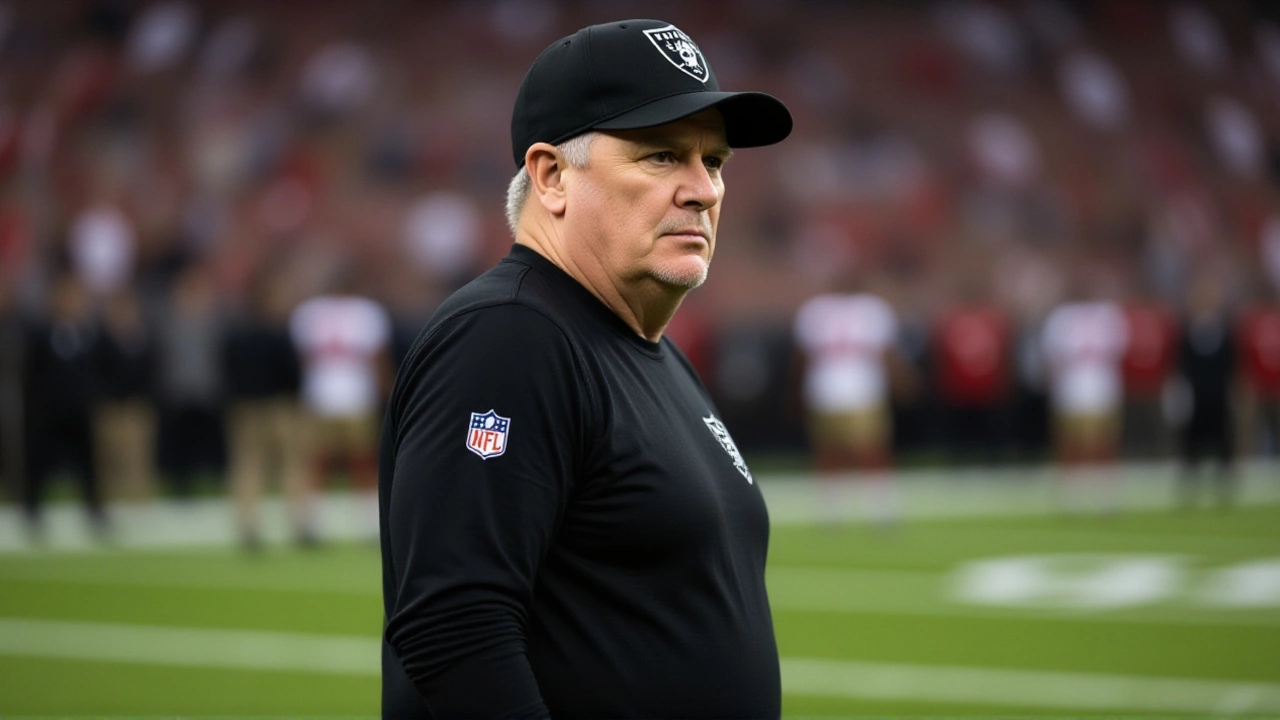
Enter Greg Olson: The Veteran Stopgap
Greg Olson isn’t a flashy hire. He’s not a rising star. He’s a lifer—a former NFL quarterback turned offensive coordinator who worked under Mike Shanahan in Denver and later with the Atlanta Falcons. His last NFL role? Offensive coordinator for the Oakland Raiders in 2014. He’s spent the last six years coaching quarterbacks in college and in the XFL. Carroll didn’t hire Olson because he’s the future. He hired him because he’s steady. Because he knows how to manage a broken offense. Because he won’t overcomplicate things. "He’s going to simplify everything," said a source close to the coaching staff. "No more 12-receiver sets. No more ‘let’s see what happens.’ Just run the ball, protect Geno, and take what’s given." The immediate test? A home game against the Kansas City Chiefs next Sunday. A team that’s scored 30+ points in five straight games. Olson will need to turn a unit that’s averaged just 18.3 points per game into something that can keep pace.The Fallout: Money, Morale, and Momentum
The financial hit is real. The Raiders will pay Kelly $13 million for 40 games he won’t coach. But the bigger cost? Morale. Players were already frustrated. Some felt Kelly’s system didn’t suit Smith’s strengths. Others said the playbook was too complex, too slow. "We were trying to run a college offense in the NFL," one veteran offensive lineman said anonymously. "It didn’t work. And now we’ve got to learn a whole new language in three weeks." The Raiders’ front office didn’t just fire Kelly—they sent a message. No more excuses. No more waiting. If you’re not winning, you’re out. Even if it costs you millions.
What’s Next?
Olson will run the offense for the rest of the 2025 season. The Raiders have no stated timeline for hiring a permanent coordinator. That decision likely won’t come until after the season ends—and only if Carroll remains on the job. There’s speculation he could be fired too, if the team finishes below .500. For now, the focus is on survival. Five games left. Five opponents with winning records. One interim coordinator with a 1980s playbook and a quiet confidence. The Raiders didn’t just change coordinators. They changed their entire philosophy. From innovation to instinct. From complexity to clarity. And the clock is ticking.Frequently Asked Questions
Why was Chip Kelly fired so quickly after the game?
The Raiders’ offense had collapsed in the loss to Cleveland, with Geno Smith sacked five times and the running game completely ineffective. Head Coach Pete Carroll, known for patience, snapped after weeks of frustration. The four-hour turnaround was intentional—to signal zero tolerance for underperformance and to prevent any perception of hesitation. It was a statement as much as a decision.
How much money is the Raiders losing by firing Chip Kelly?
The Raiders are on the hook for $13 million remaining on Kelly’s contract, which covered 40 games. That’s one of the largest severance packages ever paid for an in-season firing. The team absorbed the cost to avoid further disruption, believing the long-term damage of keeping Kelly would be worse than the financial hit.
Who is Greg Olson, and why was he chosen?
Greg Olson is a 67-year-old veteran coach who last called NFL plays in 2014 with the Raiders. He’s known for simplicity, discipline, and quarterback development. Carroll picked him not for innovation, but for stability. Olson’s job is to protect Geno Smith, run the ball efficiently, and avoid mistakes—not reinvent the offense.
What does this mean for Geno Smith’s future with the team?
Smith’s performance has been uneven, but he’s not the primary target of blame. The offensive system was misaligned with his strengths—quick release, mobility, short-to-intermediate reads. Olson’s simpler scheme may actually help Smith thrive. If Smith plays well the rest of the season, he could earn a contract extension. If not, the Raiders may look to draft a quarterback in 2026.
Is Pete Carroll in danger of losing his job too?
Yes. While Carroll’s job isn’t officially on the line, a final record below .500 could force ownership’s hand. He was hired to turn the franchise around, and with three losing seasons in four years, patience is wearing thin. His aggressive coaching changes suggest he knows the stakes. If the Raiders lose their next five games, his tenure may end as abruptly as Kelly’s.
What’s the Raiders’ schedule like for the rest of the season?
The Raiders face five games against teams with winning records in their final six contests: Kansas City Chiefs, Los Angeles Chargers, Buffalo Bills, Seattle Seahawks, and San Francisco 49ers. Only one opponent (the Cincinnati Bengals) is below .500. It’s a brutal gauntlet, and Olson’s ability to prepare the offense quickly will determine whether the season ends with dignity—or disaster.